

Senior-Friendly Phone Cases: Enhancing Safety and Comfort
Losing grip on a mobile phone can easily turn into a stressful situation for elderly family members, especially in busy London households. As a caregiver, finding ways to improve both safety and ease of use is often a top priority. Senior-friendly phone cases address these daily concerns with features like ergonomic grips, high-contrast buttons, and lightweight materials, offering solutions that support independence while minimising risk for older adults.
Table of Contents
- Senior-friendly Phone Cases Defined And Explained
- Design Variations For Elderly Device Protection
- Essential Features Supporting Senior Usability
- Risks Of Unsuitable Cases And Mistake Avoidance
- Comparing Alternatives For Elderly Device Safety
Key Takeaways
| Point | Details |
|---|---|
| Senior-friendly Design | Phone cases for seniors include features like high-contrast buttons and ergonomic grips to enhance usability and safety. |
| Material Importance | Lightweight and durable materials are essential to reduce fatigue and improve handling for elderly users. |
| Diverse Case Options | Varied designs such as rugged, hybrid, and ergonomic cases cater to different needs, ensuring tailored protection for seniors. |
| Risks of Inadequate Design | Poorly designed cases can hinder usability and confidence, leading to potential accidents, emphasising the need for thoughtful selections. |
Senior-friendly phone cases defined and explained
Senior-friendly phone cases represent specialised protective accessories designed to address the unique technological needs of older adults. These cases go far beyond traditional device protection, serving as adaptive solutions that accommodate physical challenges faced by seniors.
These innovative accessories incorporate several distinctive features tailored specifically for elderly users, including:
- Enlarged, high-contrast buttons for improved visibility
- Ergonomic grips with textured surfaces to prevent accidental drops
- Lightweight materials reducing overall device weight
- Enhanced tactile feedback mechanisms
- Simplified interface designs
The primary objective of senior-friendly phone cases is to promote digital independence and confidence among older technology users. By mitigating physical limitations such as reduced hand strength, diminished dexterity, and visual impairments, these cases enable seniors to interact more comfortably with their digital devices.
Technological Adaptability becomes crucial in these designs. Manufacturers increasingly recognise that one-size-fits-all approaches fail to address the diverse needs of senior populations. Accessibility features are now central to phone case design, transforming them from mere protective shells into supportive technological interfaces.
Pro tip: When selecting a senior-friendly phone case, prioritise comfort, grip security, and ease of use over aesthetic considerations.
Design variations for elderly device protection
Designing phone cases for elderly users involves a sophisticated approach that goes beyond standard protective accessories. Specific design variations address unique challenges faced by seniors, ensuring their technological interactions remain safe and comfortable.
Phone case designs for elderly users typically fall into several key categories:
- Rugged Cases: Provide maximum protection with multiple shock-absorption layers
- Hybrid Cases: Balance slimness with robust protection
- Folio Cases: Offer additional screen coverage and grip support
- Ergonomic Cases: Designed with specialised grips and textured surfaces
Each design variation serves a specific purpose in supporting seniors’ device interactions. Rugged cases, for instance, feature reinforced corners and thick materials that protect against accidental drops - a critical consideration for users with reduced hand coordination.
Material Selection plays a crucial role in elderly-focused case design. Lightweight yet durable materials help compensate for diminished hand strength while providing comprehensive device protection. Manufacturers now incorporate specialised polymers and cushioning technologies that absorb impact without adding significant weight.
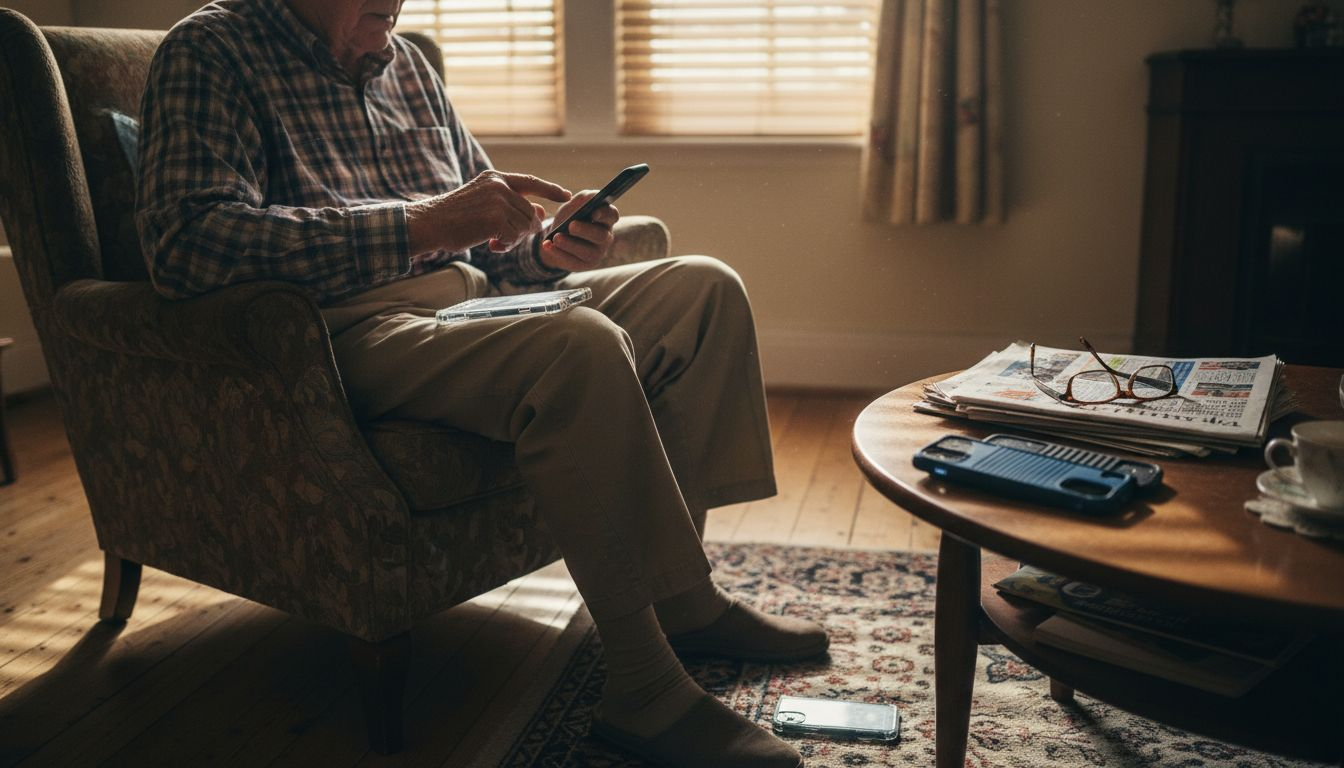
Pro tip: Select a phone case with multiple grip points and a slightly raised edge to prevent accidental screen contact during drops.
Essential features supporting senior usability
Senior device usability hinges on thoughtfully designed phone case features that address unique physical and cognitive challenges. Key accessibility requirements transform mobile technology interactions for elderly users, ensuring comfortable and safe digital engagement.
Critical usability features for senior-friendly phone cases include:
- Large, high-contrast tactile buttons
- Anti-slip ergonomic grips
- Lightweight materials reducing hand strain
- Compatibility with hearing aids
- Clear visual labelling
- Simple, intuitive design elements
Interaction Design plays a pivotal role in creating senior-friendly mobile accessories. Efficient error handling and speech recognition technologies help mitigate operational challenges, enabling more confident device usage among older adults.
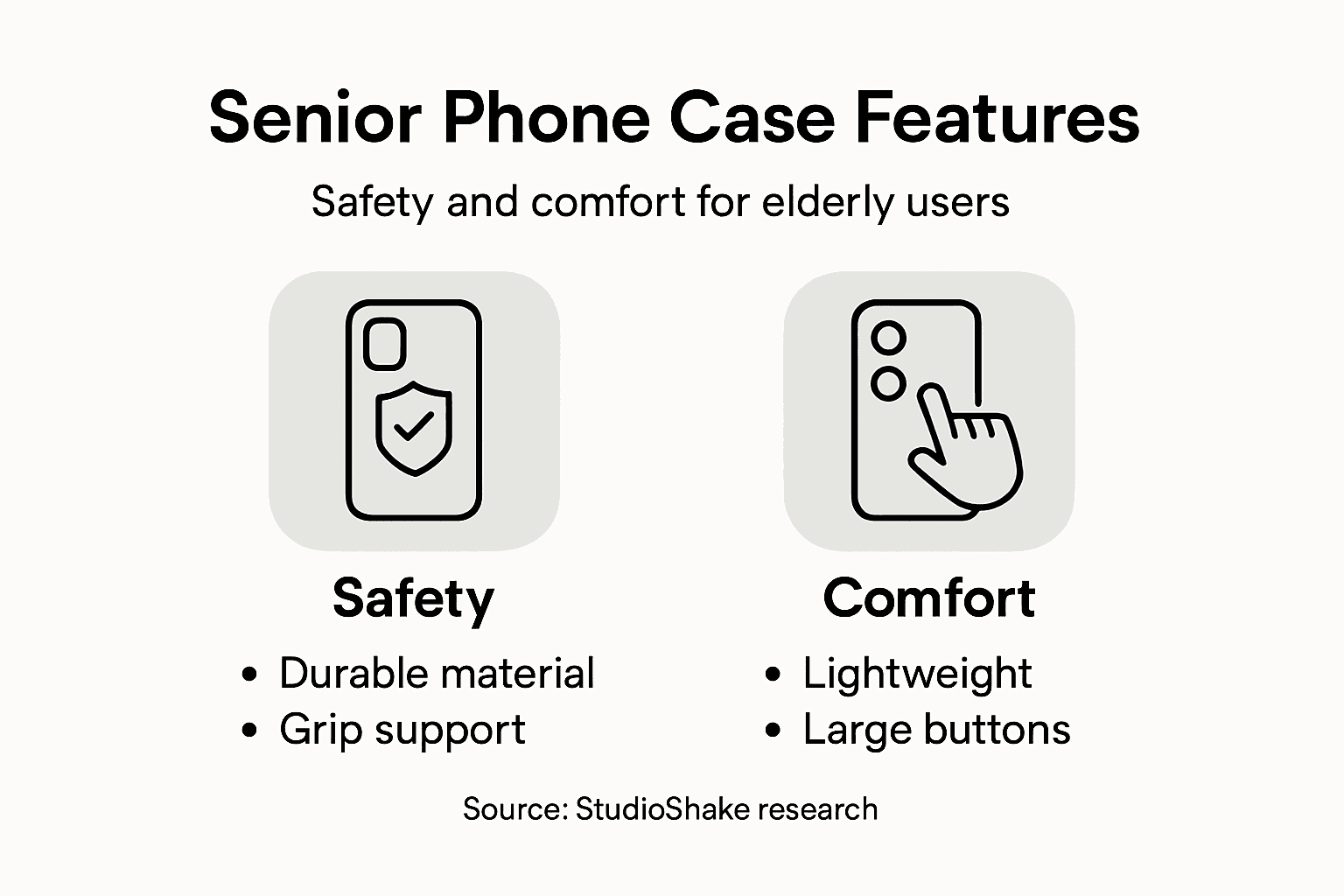
These specialised features collectively aim to reduce cognitive load and physical barriers, transforming mobile technology from a potential source of frustration to an empowering tool for senior independence. By prioritising simplicity, safety, and intuitive design, manufacturers can create phone cases that genuinely support elderly users’ technological needs.
This summary highlights the impact of key features for senior usability:
| Feature | User Challenge Addressed | Result for Seniors |
|---|---|---|
| High-contrast buttons | Visual impairments | Easier device navigation |
| Lightweight materials | Reduced hand strength | Less fatigue and strain |
| Hearing aid compatible | Auditory device interference | Clear sound transmission |
| Clear labelling | Cognitive accessibility | Faster device learning |
Pro tip: Test potential phone cases by simulating senior users’ hand movements and grip strength to ensure optimal usability.
Risks of unsuitable cases and mistake avoidance
For seniors, selecting an inappropriate phone case can introduce significant safety and operational challenges. Unsuitable cases pose multiple risks to device functionality and user safety, potentially compromising elderly users’ technological independence.
Common risks associated with poorly designed phone cases include:
- Slippery surfaces increasing drop probability
- Obscured device buttons and connectors
- Complex closure mechanisms
- Materials that reduce grip strength
- Designs that impede hearing aid compatibility
- Buttons too small for arthritic hands
Device Interaction becomes problematic when cases are not thoughtfully designed. Inclusive design principles are crucial for mitigating potential safety risks, ensuring seniors can confidently use their mobile devices without fear of accidents or operational errors.
The consequences of unsuitable phone cases extend beyond mere inconvenience. Inappropriate designs can lead to increased strain, reduced confidence, and potentially dangerous situations where seniors might avoid using their devices altogether. Manufacturers and caregivers must prioritise cases that support, rather than hinder, elderly technological engagement.
Pro tip: Always test potential phone cases by simulating senior users’ hand movements and grip capabilities before making a final selection.
Comparing alternatives for elderly device safety
Selecting the most appropriate phone case involves carefully weighing multiple protective strategies tailored to seniors’ unique needs. Different case designs offer varying levels of device protection, requiring nuanced consideration of individual user requirements.
Key case alternatives for elderly users include:
- Rugged Cases: Maximum impact protection
- Hybrid Cases: Balanced protection and aesthetics
- Folio Cases: Enhanced screen coverage
- Slim Cases: Lightweight portability
- Ergonomic Cases: Specialised grip support
Protective Design represents more than physical device shielding. Tailored features distinguish safer design alternatives, addressing seniors’ specific physical and cognitive challenges through thoughtful technological adaptation.
Each case variant offers unique advantages, making selection a personalised process dependent on the individual senior’s mobility, strength, and technological comfort level. Factors like hand dexterity, vision capabilities, and daily activity patterns must inform the ultimate protective strategy.
Here’s how senior-friendly phone case designs differ in benefits:
| Case Type | Primary Benefit | Ideal For |
|---|---|---|
| Rugged | Maximum drop protection | Seniors with unsteady grip |
| Hybrid | Balanced weight and protection | Active elderly users |
| Folio | Extra screen coverage | Visually impaired seniors |
| Ergonomic | Improved grip comfort | Seniors with arthritis |
| Slim | Easier portability | Elderly preferring light devices |
Pro tip: Prioritise functional safety and ease of use over aesthetic considerations when selecting a senior-friendly phone case.
Discover Senior-Friendly Phone Cases Designed for Comfort and Safety
Navigating the challenges of reduced hand strength, limited dexterity, and visual impairments can make using a mobile device frustrating for seniors. At StudioShake, we understand the importance of enhancing digital independence with phone cases that offer ergonomic grips, lightweight materials, and high-contrast designs tailored specifically for comfort and ease of use. Our iPhone collection includes options that combine protection with senior-friendly features to help seniors regain confidence in device handling.
Explore our range today at StudioShake and find the perfect case that safeguards devices while accommodating the unique needs of elderly users. Act now to prioritise safety and comfort by selecting from our specially curated cases or discover more through our MagSafe accessories that complement seamless and secure usage. Make technology accessible and enjoyable for seniors with solutions designed to empower and protect.
Frequently Asked Questions
What are senior-friendly phone cases?
Senior-friendly phone cases are protective accessories designed specifically for older adults, featuring enlarged buttons, ergonomic grips, and simplified interfaces to address the unique technological needs and challenges faced by seniors.
How do senior-friendly phone cases enhance usability for elderly users?
These cases offer features such as high-contrast buttons, anti-slip grips, and lightweight materials, making devices easier to handle and interact with, thereby promoting digital independence and confidence among senior users.
What types of designs are available for senior-friendly phone cases?
Common designs include rugged cases for maximum protection, hybrid cases for a balance of slimness and safety, folio cases for added screen coverage, and ergonomic cases with specialised grips to prevent accidental drops.
Why should seniors avoid unsuitable phone cases?
Unsuitable phone cases can increase the risk of device drops, obscure important buttons, and create operational challenges, potentially compromising safety and reducing the user’s confidence in using technology effectively.
Recommended
- Ergonomic Phone Cases: Easing Wrist Strain Daily – StudioShake
- Ergonomic Phone Cases – Why Health Matters Most – StudioShake
- Role of Phone Cases – Protecting Devices Everyday – StudioShake
- Ergonomic Phone Cases: Reducing Strain for Parents – StudioShake
- Матраци високоеластична пяна – ръководство за избор на качествени матраци
- 7 βήματα για τις καλύτερες καλύψεις στρωμάτων στο σπίτι σας | Afrokoptiki